By Dr. Wahaf Aldahasee
Founder & CEO, Pharma Group
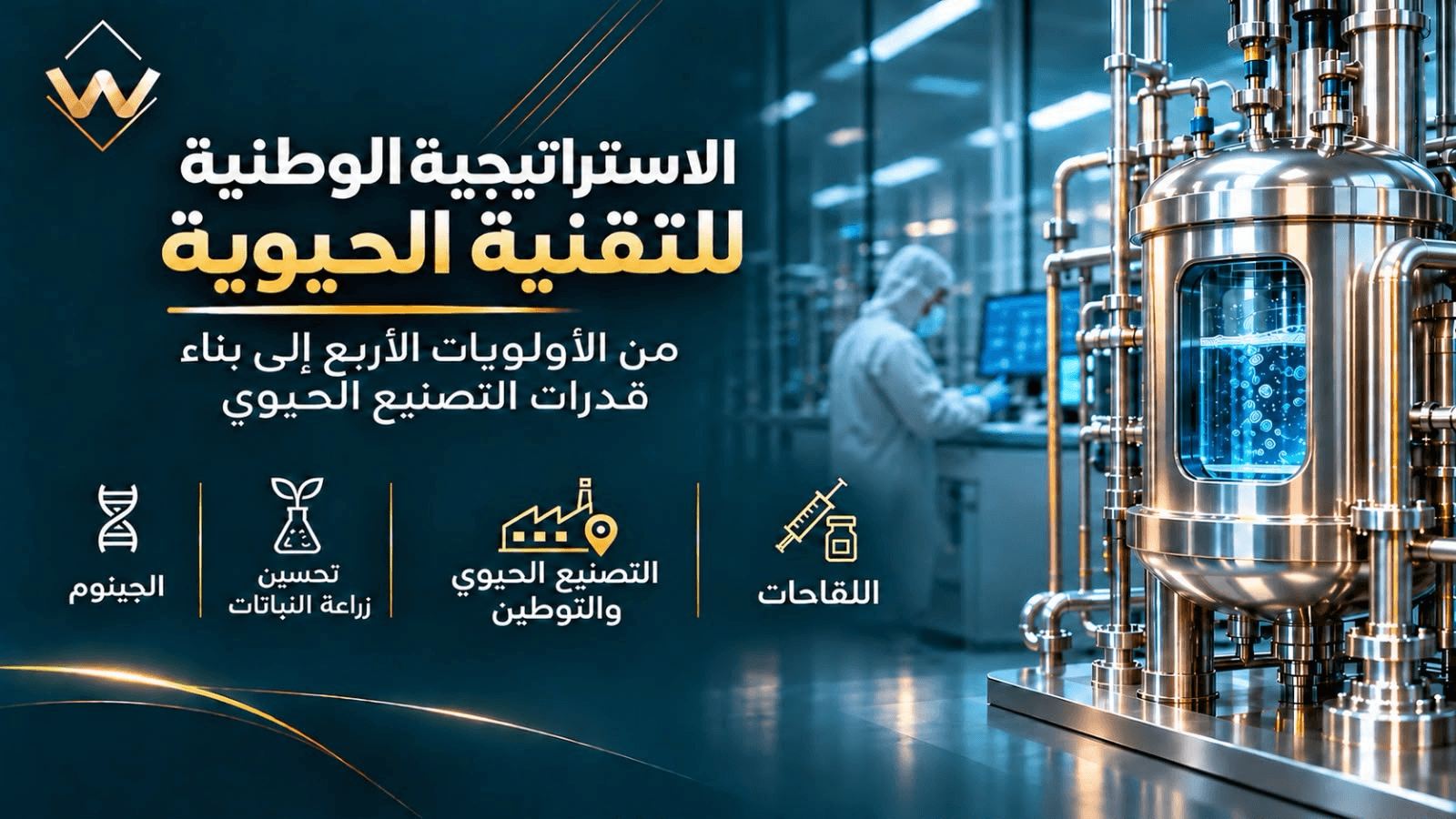
Saudi Arabia’s National Biotechnology Strategy identifies four strategic priorities: vaccines, biomanufacturing and localization, genomics, and plant optimization.
Together, these priorities reflect an ambition that extends beyond scientific development. They connect biotechnology innovation with industrial capabilities, health resilience, and long-term economic diversification.
However, translating national priorities into industrial outcomes raises an important question for investors, manufacturers, and industry leaders:
What does it take to move beyond establishing biomanufacturing facilities toward developing the technical knowledge and systems required to manufacture biological products consistently and sustainably?
This question is particularly relevant to vaccines and biomanufacturing, where product quality depends on a thorough understanding of the manufacturing process, consistent performance, and specialized production controls.
The Four Priorities of Saudi Arabia’s National Biotechnology Strategy
Launched on January 25, 2024, the strategy aims to position Saudi Arabia as a regional biotechnology leader by 2030 and a global leader by 2040.
It establishes four priority areas.
1. Vaccines
The strategy aims to develop end-to-end local vaccine manufacturing capabilities, strengthen self-sufficiency, enable exports to the Middle East and North Africa, and advance research and development in innovative vaccine technologies.
2. Biomanufacturing and Localization
This priority focuses on developing an advanced domestic biomanufacturing platform to support the production of biologics and biosimilars, strengthen local capabilities, and create opportunities for international market participation.
3. Genomics
The strategy seeks to expand genomic databases and analytical capabilities, advance research, and promote the use of genomic information in prevention, diagnosis, and more precise healthcare interventions.
4. Plant Optimization
This area aims to improve agricultural productivity and food security while supporting crop innovation, environmental sustainability, and more efficient resource utilization.
Although these priorities collectively support the development of Saudi Arabia’s biotechnology ecosystem, vaccines and biomanufacturing present particularly demanding industrial and regulatory requirements.
Understanding those requirements is essential for translating strategic ambitions into viable manufacturing projects.
Why Does Biomanufacturing Require Distinct Capabilities?
Biopharmaceutical manufacturing uses biological systems, including living cells and microorganisms, to produce therapeutic substances and products.
Unlike many conventional chemical manufacturing processes, biological systems exhibit inherent variability. Product characteristics can therefore be influenced by both the materials used and the conditions under which manufacturing takes place.
Depending on the product and technology, manufacturing may involve cell cultivation, production of the biological substance, purification, characterization, formulation, and filling.
These processes vary considerably across different types of vaccines and biological medicines. No single manufacturing model applies to every product.
The World Health Organization recognizes that the complexity and natural variability of biological materials require specific manufacturing and quality control considerations.
From an industrial perspective, the challenge is not simply operating sophisticated equipment. It is understanding how manufacturing conditions influence the characteristics and quality of the final product.
Three capabilities are particularly important.
1. Process Knowledge: Understanding What Determines Product Quality
Biomanufacturing requires more than documented operating instructions.
Organizations must understand the relationship between process parameters, biological materials, and the quality attributes of the product.
Variations in certain operating conditions may affect product characteristics, impurity profiles, or manufacturing performance.
Consequently, effective manufacturing requires knowledge of the biological system, critical process parameters, analytical methods, and the controls needed to maintain defined quality attributes.
This understanding becomes especially important during technology transfer, manufacturing scale-up, and process changes.
From an executive standpoint, the ability to absorb and apply technical knowledge should be considered a central measure of a biomanufacturing investment’s success.
A facility capable of understanding its processes is better positioned to investigate deviations, evaluate proposed changes, and make technically justified decisions within its regulatory responsibilities.
By contrast, continued dependence on external partners for fundamental process understanding may limit operational autonomy and future development.
2. Manufacturing Consistency: Beyond Producing a Successful Batch
Successfully producing one batch does not necessarily demonstrate that a manufacturing process is consistently controlled.
Pharmaceutical manufacturing requires the ability to produce successive batches that meet established specifications and quality standards.
This is especially relevant for biological products because process variability and differences in starting materials can influence manufacturing outcomes.
Maintaining consistency requires an integrated approach involving equipment qualification, process validation, monitoring of critical parameters, appropriate analytical testing, and systematic deviation and change management.
Consistency does not mean that every batch must be absolutely identical in every measurable characteristic.
Rather, relevant quality attributes must remain within scientifically justified and approved limits.
When evaluating biomanufacturing readiness, production capacity should therefore be considered alongside evidence of process consistency and the organization’s ability to sustain it over time.
This distinction is particularly significant when assessing expansion projects and long-term manufacturing investments.
3. Specialized Controls: Meeting the Requirements of Biological Manufacturing
Biological medicines require Good Manufacturing Practices alongside controls appropriate to each product’s characteristics and associated risks.
Depending on the process, these may include the management of biological starting materials, cell banks or seed lots, contamination prevention, controlled manufacturing environments, and appropriate testing of identity, purity, and potency.
Traceability, documentation, process validation, and quality risk management also play essential roles.
Sterile manufacturing requirements apply where relevant to the product and manufacturing process.
In vaccine manufacturing, quality oversight extends beyond production activities to product testing and regulatory procedures associated with batch assessment and release.
WHO guidance on Good Manufacturing Practices for biological products highlights the importance of these specialized controls, while recognizing that technical requirements differ across product categories.
For manufacturers and investors, this means that quality systems, analytical laboratories, and specialized technical expertise must be incorporated into the industrial investment model from the outset.
They are fundamental components of manufacturing readiness, rather than optional capabilities to be developed after production begins.
What Do These Requirements Mean for Investors and Manufacturers?
The National Biotechnology Strategy identifies priority opportunities, but it does not imply that every organization is equally prepared to pursue them.
For investors, evaluating a biomanufacturing project requires consideration of the technology platform, workforce capabilities, quality systems, knowledge transfer arrangements, and market access requirements, alongside capital expenditure.
For manufacturers, the priority is to develop the operational and analytical competencies necessary for the specific product and process.
For international technology partners, clearly defined transfer responsibilities, technical documentation, training requirements, and acceptance criteria are essential to establishing measurable outcomes.
These considerations are not obstacles to the strategy’s ambitions. They are prerequisites for translating industrial opportunities into sustainable operations.
Dr. Wahaf’s Decision Lens: Three Questions for Biomanufacturing Investment
When assessing an investment in vaccines or biological medicines, I consider three questions particularly useful:
1. Does the organization understand its manufacturing process?
Can it identify critical parameters and explain their influence on product quality?
2. Can the organization demonstrate manufacturing consistency?
Are validated processes, monitoring systems, and effective deviation and change management practices in place?
3. Does the facility possess the specialized capabilities required for its products?
Are the necessary technical personnel, analytical resources, quality systems, and regulatory controls available?
These questions do not replace detailed technical and regulatory assessments. They provide a practical executive perspective for evaluating industrial readiness and long-term investment value.
Executive Conclusion: Turning National Priorities into Industrial Capabilities
Saudi Arabia’s National Biotechnology Strategy sets out four ambitious priorities for developing a competitive biotechnology ecosystem.
Within vaccines and biomanufacturing, achieving these ambitions requires more than physical infrastructure or the availability of advanced manufacturing equipment.
It requires deep process understanding, demonstrated manufacturing consistency, and specialized quality and operational controls aligned with the characteristics of biological products.
Industrial capability should ultimately be assessed not only by what a facility can produce, but by what its organization can understand, control, and manufacture reliably over time.
Developing these capabilities is essential to strengthening local biomanufacturing and establishing a sustainable foundation for future industrial growth and competitiveness.